What to Do in the First 48 Hours After Roof Storm Damage
The wind has passed and your roof took a beating, so here is the order that protects your home and your claim.
October 27, 2026 · 4 min read
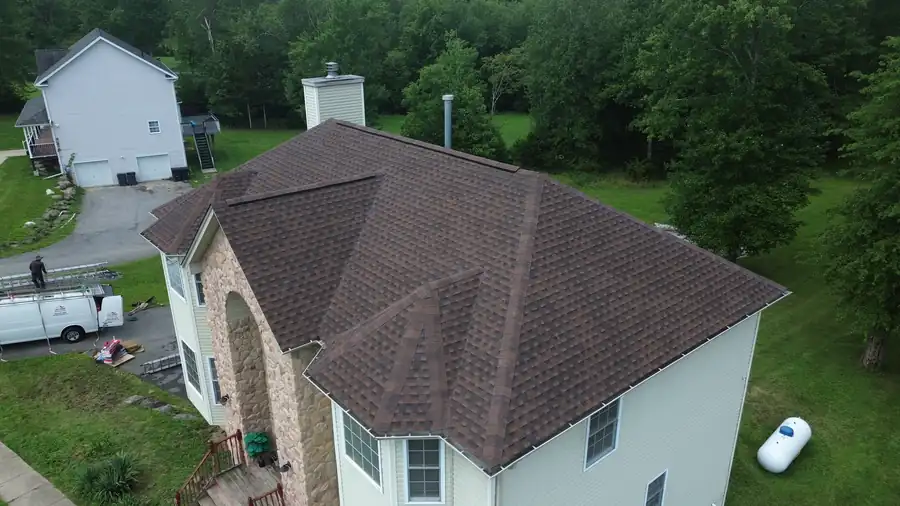
The wind dies down, the rain stops, and you step outside to look up at your house. That first look is natural, but the first job is making sure nobody gets hurt. Stay off the roof. Wet shingles, loose debris and a steep pitch are a bad mix, and a fall costs far more than a leak ever will. Check the attic and the upstairs ceilings from the inside instead, and keep family members out of any room where a ceiling is sagging or bulging.
If a tree limb is resting on the house, or a power line is down anywhere near it, stay clear and call the utility company before you call anyone else.
Walk the yard before you touch anything
Once things are safe, take a slow walk around the property at ground level. Look at the lawn, the driveway and the flower beds for shingle pieces, strips of metal flashing, bent gutter sections, or granules that look like coarse dark sand. Whatever landed on the ground tells you which slope took the hit, and that is useful when you describe the damage later to a roofer or an adjuster.
Document everything with photos and notes
Photos are the most valuable thing you can have, so take them before you move or repair anything. Shoot a wide picture of each side of the house, then close-ups of whatever looks wrong: missing shingles, creased shingles, dented vents, cracked skylights, torn flashing around the chimney. Photograph interior stains and drips too, and write down the date and time you first noticed each one. A short video where you talk through what you see works well, because it captures the order and the context.
Don't forget the small parts that are easy to miss from the lawn. Roof vents, rubber boots around plumbing pipes, and the metal edge along the eaves all take punishment in strong wind. A good roofer checks every one of them on the way up. You can help by zooming in from an upstairs window or from the ground with your phone, as long as you never climb to get the shot.
Stop more water from coming in
Your goal over the first day or two is to keep the damage from getting worse, not to fix everything. If water is coming in, move furniture, set a bucket under the drip and cover belongings with plastic. If a ceiling has a bulge full of water, poke a small hole in the lowest point so it drains into a bucket instead of letting go all at once across the room.
If the roof itself is open to the weather, a temporary cover is a job for a crew with the harnesses and the experience. A do-it-yourself tarp that is nailed down the wrong way can tear more shingles than the storm did. Keep every receipt for emergency materials or work in one folder with your photos.
Get a roofer to look before you sign anything
A free inspection answers the question you cannot answer from the ground: how far does the damage actually go? Chriss Construction Corp., which also trades as NY Empire Contracting Corp, offers a free roof inspection with every job, and that is the kind of starting point a homeowner should look for. You get a professional set of eyes on the roof without any pressure to commit.
Be careful with anyone who knocks on your door right after a storm and asks for a deposit or a signature before the roof has even been examined. A reputable contractor looks first, explains what he found, and lets you decide. Keep a copy of everything you sign.
What a claim walkthrough looks like
Filing with your insurance company is the part many people dread. Alysabeth Anderson, who had her roof replaced by Chriss and his team, put it this way in her Google review: "It was a long process with insurance, but they stayed with me for the entire time. They were always easy to get in touch with for questions, and helped me to understand the insurance claim process." It is someone who answers the phone and explains each step in plain words.
Your policy decides what is covered, so read it or ask your agent, and remember that no roofer can promise what an insurer will pay. What a good contractor can do is walk the roof, document what he sees, and be available when the adjuster has questions. In general, the process tends to run like this:
- You report the damage and send your photos, notes and receipts.
- The insurance company schedules an adjuster to inspect the roof.
- Your contractor walks the roof, ideally while the adjuster is there, so both sets of notes can be compared.
- The insurer decides what it will cover, and you receive its findings in writing.
- If the numbers or the scope look wrong, you ask questions with your contractor's inspection notes and photos in hand.
Alysabeth also mentioned that Chriss supervised his own team and everyone else on the property, from the electricians to the roll-off truck deliveries, and that the crew cleaned up carefully when the job was done. After a storm, that kind of steady presence matters as much as the shingles do.
If a storm has left your roof in rough shape in Middletown, Newburgh, Port Jervis or anywhere nearby, call (845) 400-8893 and ask for the free roof inspection. You can read more about the work at /services/roofing, or send a message through /contact if you would rather text first.
Chriss Construction Corp., (845) 400-8893
Call (845) 400-8893More articles
Repair or Replace? How to Read What Your Roof Is Telling You
Not every leak means a new roof, and not every patch is worth the money, so here is how to tell the difference.
Hudson Valley Winters and Your Roof: Ice, Wind and Attic Air
Cold weather does not just test your shingles, it tests how well your attic breathes and holds heat.