Hudson Valley Winters and Your Roof: Ice, Wind and Attic Air
Cold weather does not just test your shingles, it tests how well your attic breathes and holds heat.
October 27, 2026 · 3 min read
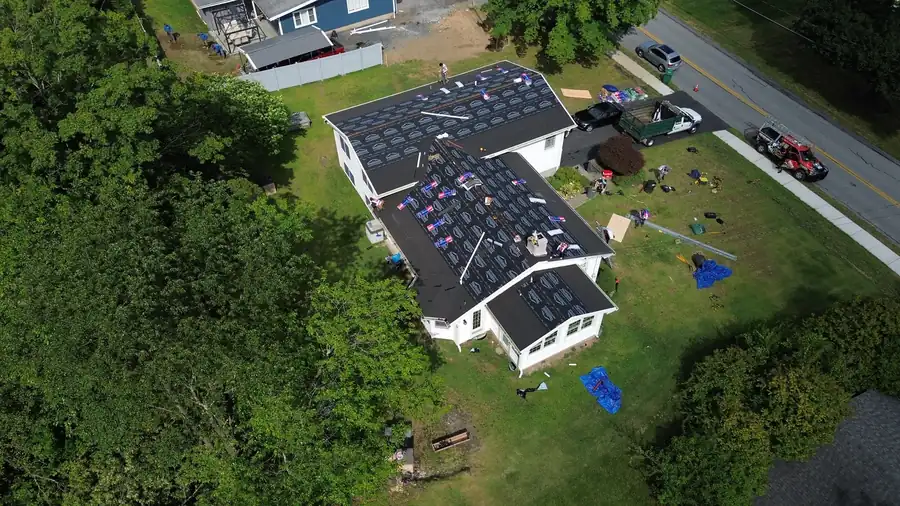
Winter in the Hudson Valley is hard on a house. Snow piles up, temperatures swing above and below freezing, and the wind comes through the valley with real force. Homeowners usually blame the shingles when something goes wrong in January. More often, the real story is happening just underneath them, in the attic.
How ice dams actually form
An ice dam is a ridge of ice along the lower edge of the roof that traps melting snow behind it. The cause is a temperature difference. Warm air from the living space leaks into the attic, warms the roof deck, and melts the snow sitting on the upper part of the roof. That water runs downhill until it reaches the eave, which stays cold because it hangs past the warm walls. There it refreezes, and the ice builds up layer by layer.
Once the dam is thick enough, more meltwater backs up behind it and works its way under the shingles. Shingles are designed to shed water running downhill, not water pushed uphill by a wall of ice. The result is a stain on the ceiling near an exterior wall, wet insulation, and sometimes peeling paint, with no obvious hole anywhere on the roof.
Why the attic matters more than people think
Two things keep an attic healthy in winter: insulation that stops warm air from rising into it, and ventilation that moves cold air through it. Think of the insulation as the lid and the ventilation as the breeze. Cold air enters low, usually through the soffit vents under the eaves, and leaves high, through a ridge vent or other exhaust vents near the peak. When that flow is blocked or poorly set up, the attic holds moisture and heat, and the roof pays for it.
Alysabeth Anderson described this exact kind of problem in her Google review of Chriss and his team. They did an entire roof replacement, and in her words they also fixed "the insulation and a vent that was not done correctly when the house was built." That is a common surprise. A new roof laid over a flawed attic setup can inherit the same trouble, so a careful crew looks at what is underneath before it covers anything.
What wind does in the cold
Cold changes how shingles behave. The sealing strip that holds each shingle to the one below it needs warmth to bond, so shingles installed in a cold snap can take a while to seal fully. A gust that arrives before the seal forms can lift a tab and crease it. Creased shingles often look fine from the street until a second storm tears them off.
Wind also loves the edges. Eaves, rakes and ridges take the most force, which is why those areas deserve extra attention during installation and again during an inspection. After a stormy stretch, look for shingles that are lifted, shifted, or missing along those lines, and for any metal edging that has pulled away.
A fall checklist you can do from the ground
You do not need to be on the roof to prepare. A walk around the house in October can catch most of the common trouble before the first heavy snow. Here is what to look for:
- Gutters packed with leaves or sagging away from the fascia, which let water freeze where it should drain.
- Missing, lifted or cracked shingles along the eaves and ridge.
- Soffit vents blocked by paint, insulation or debris.
- Daylight, frost or dark stains on the attic side of the roof deck, if you can safely peek in from the attic hatch.
- Flashing around the chimney, skylights and vent pipes that looks bent, gapped or rusted.
- Ceiling stains or peeling paint near exterior walls, which can signal moisture from last winter.
When to call someone
If you find any of these, a professional look is cheaper than waiting for a thaw to show you the leak. Good roofers check the underlayment, the flashing and the attic ventilation as part of an inspection, because a roof fails as a system. A tidy shingle job that ignores a blocked vent leaves the root cause in place.
Chriss Construction Corp. includes a free roof inspection with every job, and the crew works in Middletown, Newburgh, New Windsor, Montgomery and the surrounding towns. Call (845) 400-8893 to set up a visit before the snow flies, or read about the full range of roofing work at /services/roofing. A short check this month can save you from a very long February.
Chriss Construction Corp., (845) 400-8893
Call (845) 400-8893More articles
What to Do in the First 48 Hours After Roof Storm Damage
The wind has passed and your roof took a beating, so here is the order that protects your home and your claim.
Repair or Replace? How to Read What Your Roof Is Telling You
Not every leak means a new roof, and not every patch is worth the money, so here is how to tell the difference.