Planning a Composite Deck: Boards, Railings and Stairs
A good deck is decided long before the first board goes down, and the part you see is only half the job.
October 27, 2026 · 4 min read
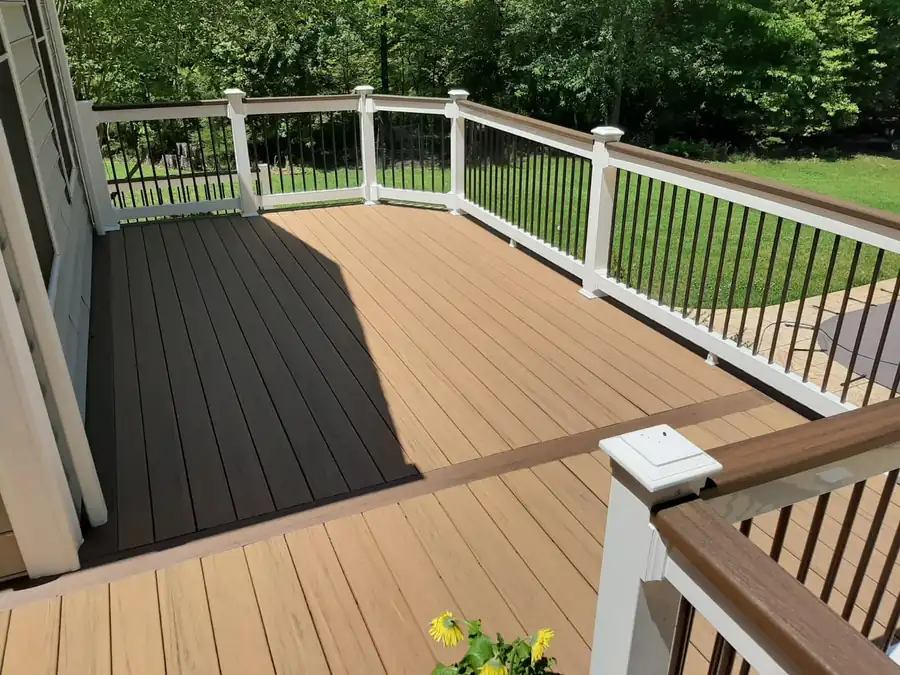
Composite decking has become a favorite for homeowners who want a deck that looks good without a yearly sanding and staining routine. One of the projects shown on the Chriss Construction Corp. site is a good example: warm composite boards with clean white railings, simple lines, and a finish that suits the house. If you are planning something similar, a little thought up front makes the difference between a deck you use all summer and one you worry about.
Start with how you will actually use it
Before picking materials, picture a normal Saturday. Is it a place for a grill and four chairs, or do you want a dining table, a lounge corner and room to walk around both? Size and shape follow from that answer. Measure the furniture you own, then add space for people to move. A deck that looks big on paper can feel tight once the table is out.
Think about sun and shade as well. A deck that faces west gets strong afternoon heat, which matters for comfort and for how hot the boards get underfoot. Some composite colors absorb more heat than others, so touch a sample that has been sitting in the sun before you commit. Placement near doors, windows and the kitchen also shapes how often you will use the space.
The framing is the part nobody sees
Composite boards are only as good as what holds them up. Underneath is a frame of joists, beams and posts, and its job is to stay flat, strong and square for years. The footings that carry the posts have to sit on solid ground and below the depth where the soil freezes, which is a real consideration in our climate. Ask your contractor how the frame will be built and how it will be protected from rot.
Spacing matters too. Composite boards generally need supports closer together than you might expect, and the manufacturer's instructions spell out how close. A good crew follows those instructions and leaves proper gaps between boards for drainage and for the small amount of expansion that happens with temperature swings. Skipping those details is how decks end up with bounce, cupping or standing water.
Choosing boards and caring for them
Wood decking is warm and traditional, but it asks for regular sealing or staining to keep weather out. Composite trades some of that upkeep for a higher up-front material cost and a different feel underfoot. Composite is not maintenance free, though. It still needs sweeping, an occasional wash with mild soap and water, and attention to spills so they do not set into the surface.
Pick boards in person if you can. Look at the grain pattern, the edge profile and how the color changes in shade and sun. Ask whether the product has hidden fasteners or face screws, because that changes how clean the surface looks. And choose a color with the siding, trim and roof in mind, so the deck looks like part of the house instead of an add-on.
Railings and stairs
White railings give a deck a crisp, finished look, and they show well against warm boards. They also show pollen, dirt and the occasional dog nose, so plan on a wipe-down now and then. Decide early if you want simple balusters, cable, or glass panels, since each changes the view and the budget. Railing posts need solid attachment to the frame, because a railing is a safety feature before it is a design feature.
Stairs deserve equal care. Steps should feel the same from top to bottom, with each rise and each tread matching the one before it, because uneven steps are where people stumble. Add a handrail you can grip comfortably, and think about lighting so the stairs are visible after dark. Where the stairs land matters too. A solid base on a stable surface keeps the bottom step from shifting over the years.
Permits, timing and who does the work
Rules for decks vary by town, so check with your local building department about permits before the project starts, and ask your contractor how they handle that step. Also ask about timing. Weather in the Hudson Valley limits the best building months, so planning in late winter or early spring gets you on the schedule before the busy season.
Chriss Construction Corp. builds decks and patios for homeowners in Middletown, Warwick, Monroe, Montgomery and nearby towns. If you would like to talk through your ideas, call (845) 400-8893, look over the work at /services/deck-patio-installation, or send photos of your yard through /contact. A clear plan now makes the build smoother later.
Chriss Construction Corp., (845) 400-8893
Call (845) 400-8893More articles
What to Do in the First 48 Hours After Roof Storm Damage
The wind has passed and your roof took a beating, so here is the order that protects your home and your claim.
Repair or Replace? How to Read What Your Roof Is Telling You
Not every leak means a new roof, and not every patch is worth the money, so here is how to tell the difference.